About The Song
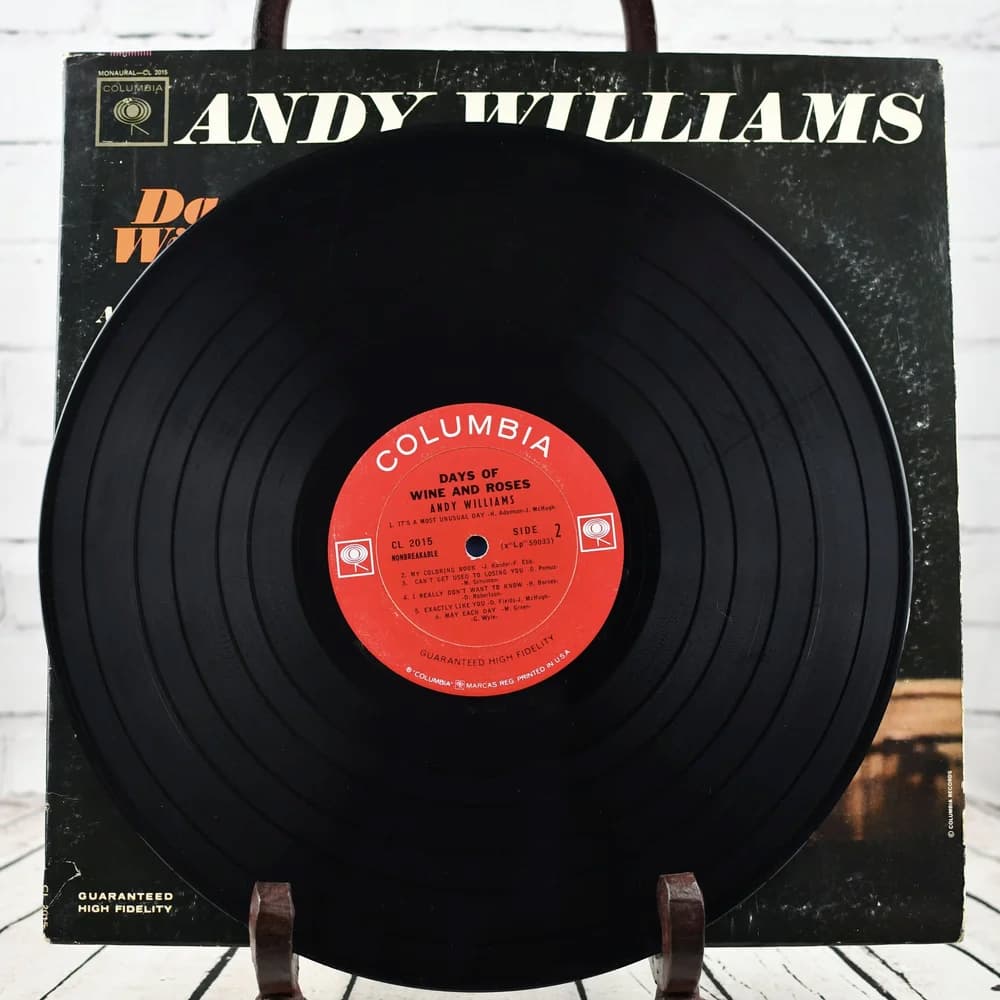
Days of Wine and Roses by Andy Williams arrived in March 1963 as a single and quickly became one of his signature recordings. It came from his Columbia album Days of Wine and Roses and Other TV Requests, released in April of that year. The collection drew directly from songs requested by viewers of his new variety show, and it turned into one of his biggest commercial successes, holding the top spot on the Billboard album chart for sixteen straight weeks and earning gold certification.
The song itself had been written a year earlier by Henry Mancini and Johnny Mercer for the 1962 film of the same name, a stark drama starring Jack Lemmon and Lee Remick as a young couple whose lives unravel through alcoholism. Mancini composed the music and Mercer supplied the lyrics after director Blake Edwards approached them following their recent triumph with “Moon River.” The film’s dark subject matter stood in contrast to the wistful, almost nostalgic tone of the finished song, which captured the fleeting sweetness of youth and happiness before life closes in.
Mercer drew the title and central image from a line in Ernest Dowson’s 1896 poem “Vitae Summa Brevis”: “They are not long, the days of wine and roses.” He reportedly finished the words in just a few minutes once Mancini played him the melody. The result was a gentle reflection on how good times slip away “like a child at play” and how people keep chasing them even when they know the door marked “nevermore” is waiting. Though the movie portrayed the harsh reality of addiction, the song offered a softer, more universal sense of lost innocence that audiences connected with immediately.
Williams recorded his version in late 1962, and Columbia paired it as the B-side to another track from the same album, “Can’t Get Used to Losing You.” Ironically, that B-side became the bigger hit, climbing to No. 2 on the Billboard Hot 100, while “Days of Wine and Roses” reached No. 26 on the Hot 100 and No. 9 on the Easy Listening chart. Still, the song’s association with Williams grew strong because it perfectly fit his warm, relaxed style and because the entire album rode the wave of his television popularity. The record stayed on the charts for well over two years and became his first million-seller.
One small but telling detail from the era is that Williams performed the song on the 1963 Academy Awards broadcast, where it had already won the Oscar for Best Original Song. Mancini and Mercer picked up the award together—their second in a row after “Moon River”—and the moment helped cement the number as a modern standard. Over the following decades it was recorded by dozens of artists, from Frank Sinatra and Ella Fitzgerald to jazz instrumentalists, but Williams’ easy, unhurried reading remained the one most people associated with the title.
The success of both the single and the album also marked a turning point for Williams. His television show was thriving, and the “TV Requests” concept showed how closely he was listening to what audiences wanted. The song’s quiet melancholy about time slipping away seemed to resonate in an era when many Americans were reflecting on the gap between the promise of the postwar years and the realities of the early 1960s. More than sixty years later, it still surfaces whenever people talk about the golden age of movie themes and the smooth pop that dominated radio before rock fully took over. For Williams, it became another lasting reminder of how a well-chosen film song, delivered with his trademark warmth, could outlast the movie itself.
Video
Lyric
The days of wine and roses laugh and run away like a child at play
Through a meadow land toward a closing door
A door marked “nevermore” that wasn’t there beforeThe lonely night discloses just a passing breeze filled with memories
Of the golden smile that introduced me to
The days of wine and roses and you(The lonely night discloses) just a passing breeze filled with memories
Of the golden smile that introduced me to
The days of wine and roses and you-oo-oo